Articles · Mind and health
A simple bedtime routine for better sleep
You do not need a perfect routine. You need a few signals your body can learn to trust.
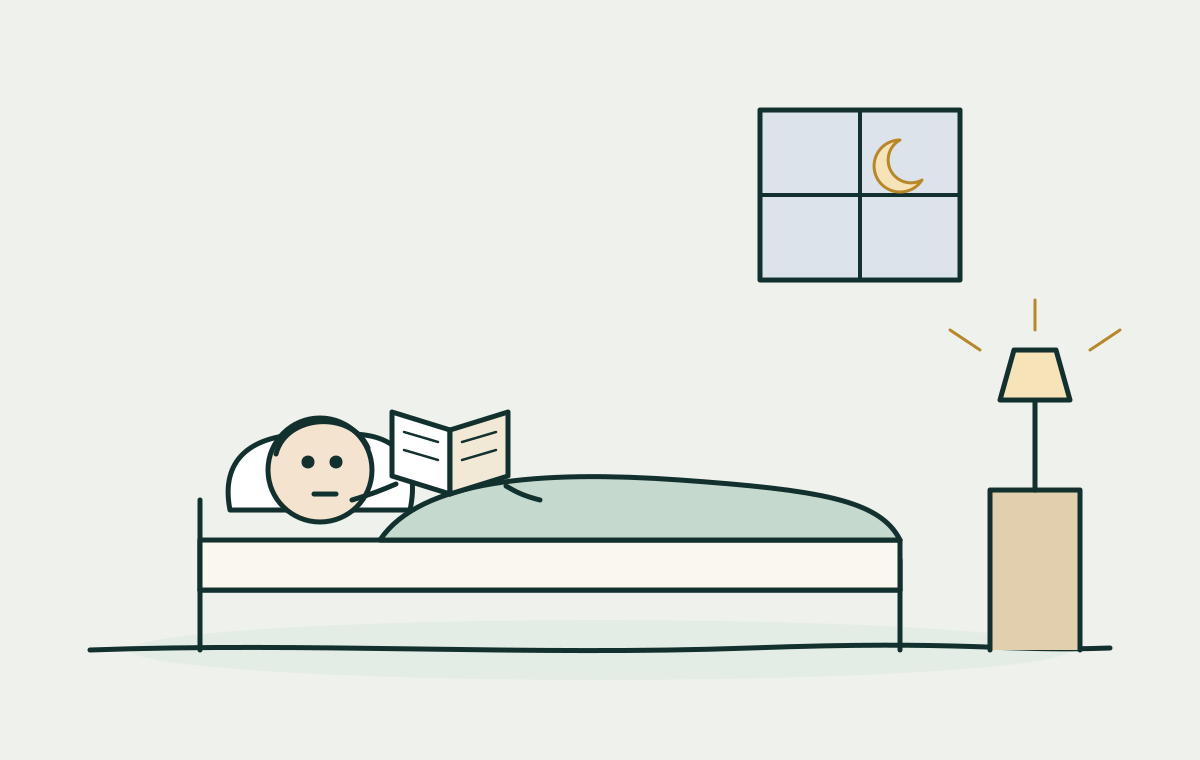
Most of us expect to go from a full day to deep sleep in a few minutes. The body does not work like that. It needs time and repeated signals that the day is over. A bedtime routine is simply a set of those signals, done in the same order most nights.
Start with the anchor: a steady wake-up time
Sleep experts consistently put this first. Go to bed and get up at about the same time every day, weekends included. Your body clock runs on consistency. A steady wake-up time is often easier to control than a steady bedtime, so start there.
A thirty-minute wind-down
Harvard Health suggests a short routine of calm activities before bed. Here is one simple version:
- 30 minutes before bed: put your phone and laptop away, unless you are using them for calm music or a guided relaxation.
- 20 minutes: do something quiet in soft light. Read for pleasure, take a warm shower or bath, or do some easy stretches.
- 10 minutes: slow breathing or relaxing your muscles one by one, from your feet up.
- Lights out: if you are still awake after a while and getting frustrated, get up and do something calm in dim light until you feel sleepy.
Set up the room
Your bedroom should be cool, dark and quiet. Harvard Health suggests a slightly cool room, around 65 to 68°F (18 to 20°C). Block out light with curtains or a sleep mask, and use steady background sound if noise wakes you. Keep work and devices in another room if you can, so your bed becomes a place your brain links with rest.
Watch the daytime too
What you do during the day shows up at night. Harvard Health advises finishing evening meals a few hours before bed and avoiding alcohol in the evening. Morning light and daily movement also help your body clock.
A routine is not a rule. It is a message to your body, repeated until it believes you.
When to talk to a doctor
If you still have trouble sleeping most nights after a few weeks of good habits, or you snore loudly, stop breathing in your sleep or feel very sleepy during the day, talk to a doctor.
Keep going
- Why your mind races at night, and what helps
- How to stop scrolling your phone in bed
- Simple things for better sleep
Sources
- Sleep hygiene: Simple practices for better rest, Harvard Health Publishing
- How electronics affect sleep, Sleep Foundation
This article is general self-help information, not medical advice. If you are struggling, talk to a doctor or a mental health professional.